

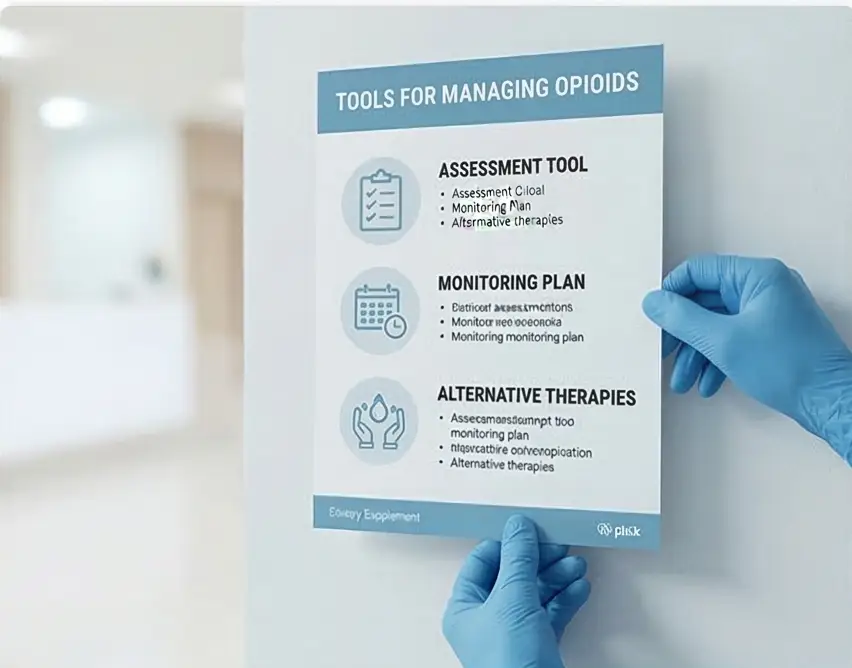
Tools for Managing Opioids
Understanding Opioid Management
Opioids can play an important role in managing moderate to severe pain when used appropriately. However, due to the risk of dependence, tolerance, and side effects, careful monitoring and structured management are essential.
Modern pain management focuses on:
- safe prescribing practices
- patient education
- alternative therapies to ensure optimal outcomes
Key Tools for Managing Opioids
Comprehensive Patient Assessment
Before prescribing opioids, a detailed evaluation is performed, including: Medical history, Pain severity and cause, Risk factors for misuse, Mental health assessment.
Prescription Monitoring Programs (PMPs)
These are digital systems used by healthcare providers to track controlled substance prescriptions.
Regular Follow-Ups and Monitoring
Ongoing monitoring is essential and may include: Routine check-ups, Pain level assessments. Urine drug screenings (when necessary), Dosage adjustments.
FAQs
Opioids are prescribed to manage moderate to severe pain, especially when other treatments are not effective. They are commonly used for post-surgical pain, injury-related pain, or chronic conditions under medical supervision.
Yes, opioids can be safe when used exactly as prescribed by a healthcare provider. Proper monitoring and following guidelines significantly reduce the risks of dependence and side effects.
A PMP is a system used by healthcare providers to track prescriptions of controlled substances. It helps prevent misuse, duplication of prescriptions, and ensures patient safety.
No, stopping opioids abruptly can cause withdrawal symptoms. Your doctor will create a tapering plan to gradually reduce the dosage safely.